Stem cell-based beauty treatments have emerged as one of the most exciting innovations in the world of aesthetics. Unlike traditional approaches that only treat the skin's surface, stem cell therapy works at the cellular level to support tissue regeneration from within. This article will scientifically discuss how stem cells are used in beauty treatments, the types of therapies available, and what you need to know before undergoing a procedure.
Why Are Stem Cells Appealing in the Beauty Industry?
As we age, the skin undergoes various changes: collagen production decreases, elasticity diminishes, and cellular regeneration slows down. These changes lead to wrinkles, sagging skin, and hyperpigmentation.
Stem cells have gained attention for their ability to naturally support tissue repair. Stem cells release various signaling molecules—including growth factors, cytokines, and exosomes—that play a role in:
Increasing collagen and elastin production for firmer, suppler skin.
Reducing inflammation that contributes to skin aging.
Improving skin texture and hydration.
Promoting the regeneration of healthier skin cells.
This approach is considered more "biological" because it works by supporting the body's natural mechanisms rather than merely masking the problem.
Applications of Stem Cells in Beauty Treatments
1. Facial Rejuvenation
Facial rejuvenation using stem cells aims to comprehensively improve skin quality. Based on recent research reviews, mesenchymal stem cell (MSC) therapy and its derivative products show benefits in:
Reducing wrinkles and fine lines.
Improving skin elasticity.
Enhancing skin hydration.
Brightening skin tone and reducing hyperpigmentation.
In Indonesia, this service is available at select healthcare facilities under the supervision of certified plastic, reconstructive, and aesthetic surgeons.
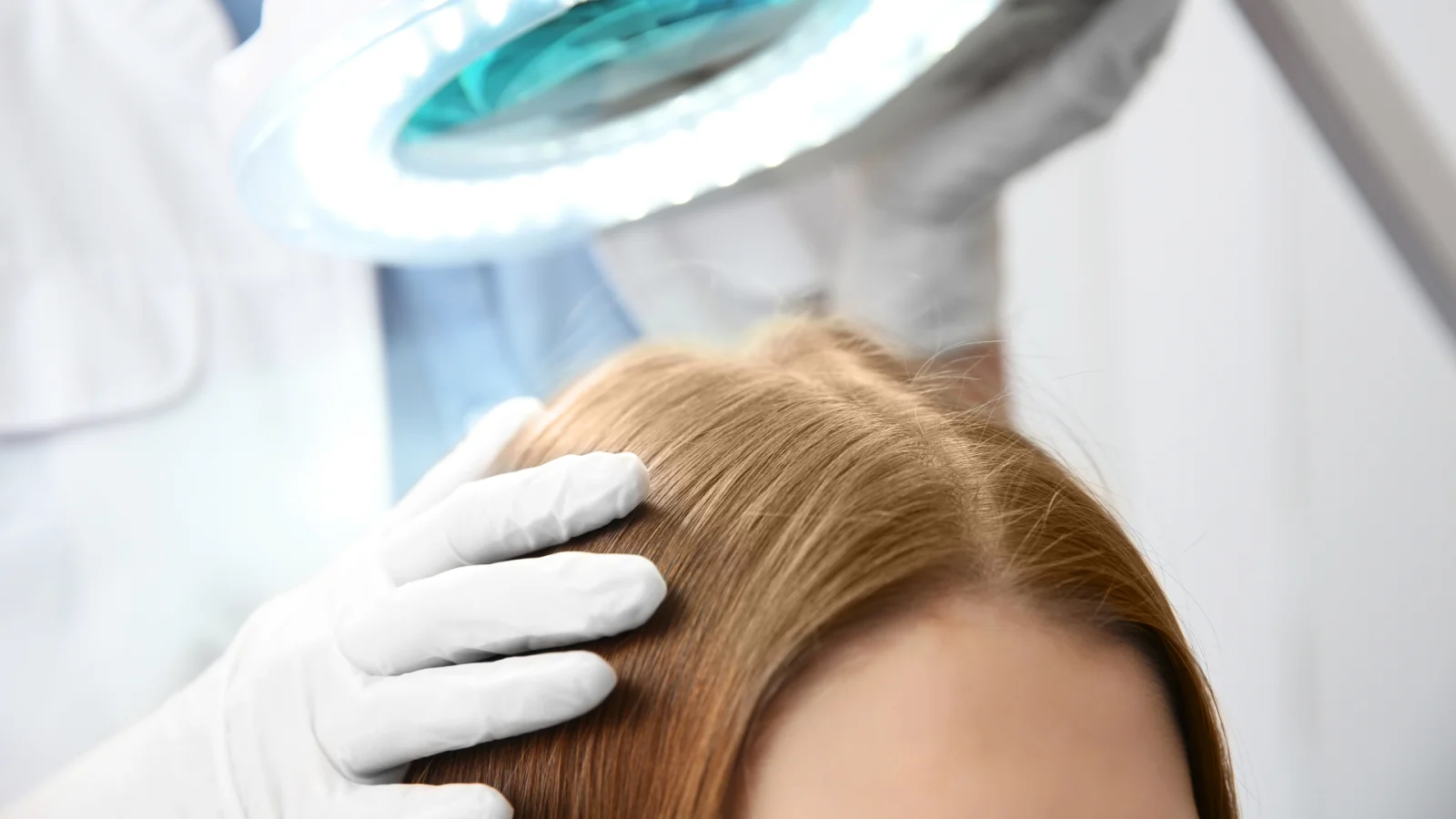
2. Hair Treatments and Hair Loss (Alopecia)
For hair loss issues, stem cell therapy and its exosomes show promising results. Studies report increased hair count and density with high patient satisfaction rates and minimal side effects.
The mechanism of action involves the activation of signaling pathways such as Wnt/$\beta$-catenin and Akt/ERK, which play a role in the hair growth cycle.
3. Scar Tissue Repair
Stem cell therapy is also used to improve the quality of scar tissue, including hypertrophic scars and keloids. Stem cells release molecules that assist in tissue remodeling and reduce inflammation in the scarred area.
Types of Stem Cell Therapies for Beauty
1. Live Cell Therapy (Stem Cell Therapy)
This form of therapy involves injecting live stem cells into the patient's body. Common cell sources include:
Adipose-derived MSCs: Obtained through a mini liposuction procedure from the abdomen or thighs.
Umbilical Cord MSCs: Obtained from a newborn's umbilical cord.
Bone Marrow MSCs.
This procedure typically combines fat transfer enriched with stem cells to restore facial volume while simultaneously improving skin quality.
2. Exosome Therapy and Conditioned Media
An increasingly popular approach is using exosomes—nano-vesicles released by stem cells—without utilizing live cells. The advantages include:
Lower risk of rejection or side effects.
Can be combined with microneedling or lasers for optimal results.
More stable for storage and distribution.
Research shows that stem cell-derived exosomes can reduce UV damage, increase collagen production, and improve skin texture.
Combination with Other Aesthetic Procedures
For maximized results, stem cell therapy is often combined with other procedures:
Microneedling: Creates micro-wounds that stimulate collagen production and enhance the absorption of stem cell products.
Fractional Laser: Assists with skin regeneration and increases therapy effectiveness.
Fat Transfer: Restores facial volume while delivering the regenerative benefits of stem cells found in fat.
Plastic surgeons note that stem cell-enriched fat transfers can provide significant improvements in skin quality, especially when combined with procedures like a facelift.
Safety and Regulations in Indonesia
In Indonesia, stem cell therapy for aesthetics is regulated by the Ministry of Health under the Decree of the Minister of Health Number HK.01.07/MENKES/1200/2025 concerning Guidelines for the Implementation of Cell and/or Stem Cell Therapy Services in Plastic, Reconstructive, and Aesthetic Surgery.
Key safety points to note:
The therapy must be performed by certified specialists in their respective fields.
Stem cell products must be manufactured in facilities certified with Good Manufacturing Practice (CPOB/GMP) from the Indonesian FDA (BPOM).
Patients must undergo initial screening to ensure the therapy is suitable and safe for their individual condition.
Facts vs. Myths: What Patients Need to Know
Myth 1: "Stem Cell Therapy Can Erase All Signs of Aging at Once"
Fact: Results are gradual and vary among individuals. The therapy works by supporting the body's natural regeneration, not by "erasing" aging instantly. Improvements are typically visible within a few weeks to months.
Myth 2: "All 'Stem Cell' Skincare Products Contain Live Cells"
Fact: Many skincare products labeled as "stem cell" actually only contain conditioned media or extracts from stem cells, not live cells. These are significantly different products compared to live cell therapy performed in medical facilities.
Myth 3: "Stem Cell Therapy is Completely Risk-Free"
Fact: Although generally safe, the procedure still carries risks such as injection-site reactions, infection, or other side effects. Therefore, it is important to have it performed at a credible medical facility.
Conclusion
Stem cell therapy opens a new chapter in the world of beauty treatments, offering a deeper, more biological approach to skin and hair rejuvenation. With its ability to support regeneration from within, this therapy becomes an attractive option for those desiring treatments that work holistically.
However, it is important to remember that this therapy is still evolving. Patients should choose legal, trusted healthcare facilities, be guided by specialist physicians, and maintain realistic expectations regarding achievable results.
This article is prepared for educational purposes. Always consult with a specialist physician before deciding to undergo stem cell therapy.